Summary of the panel at the Local Trends Congress
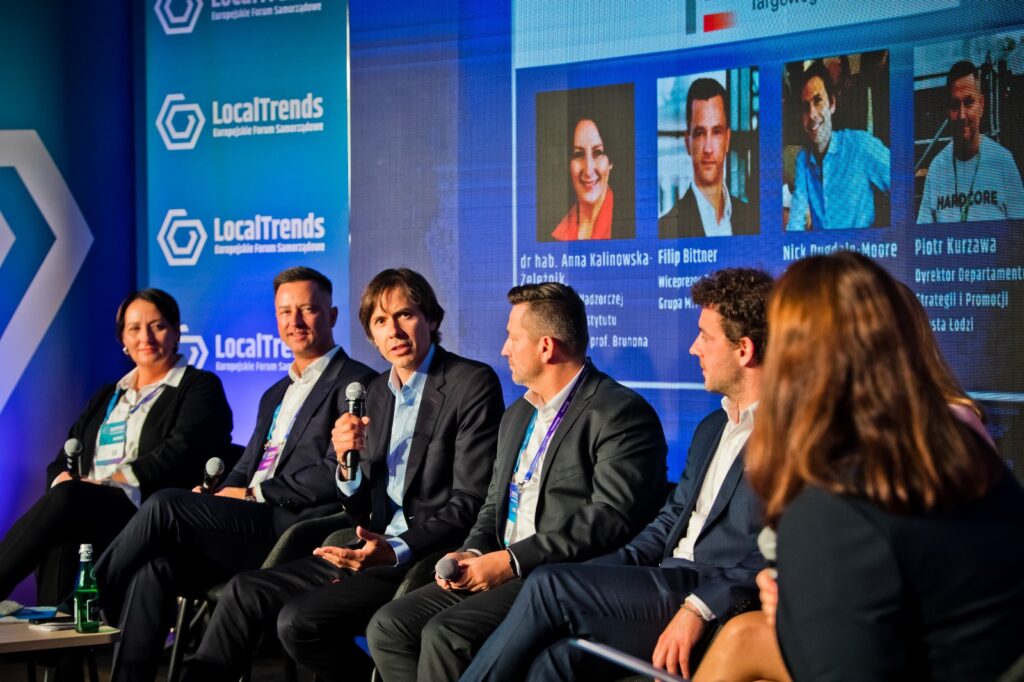
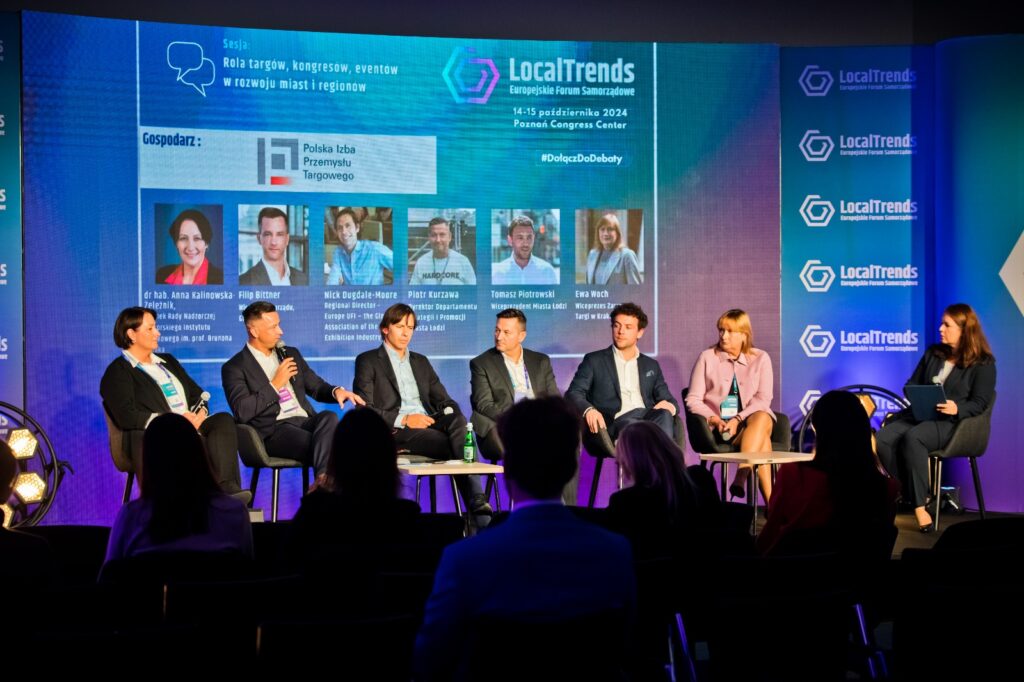
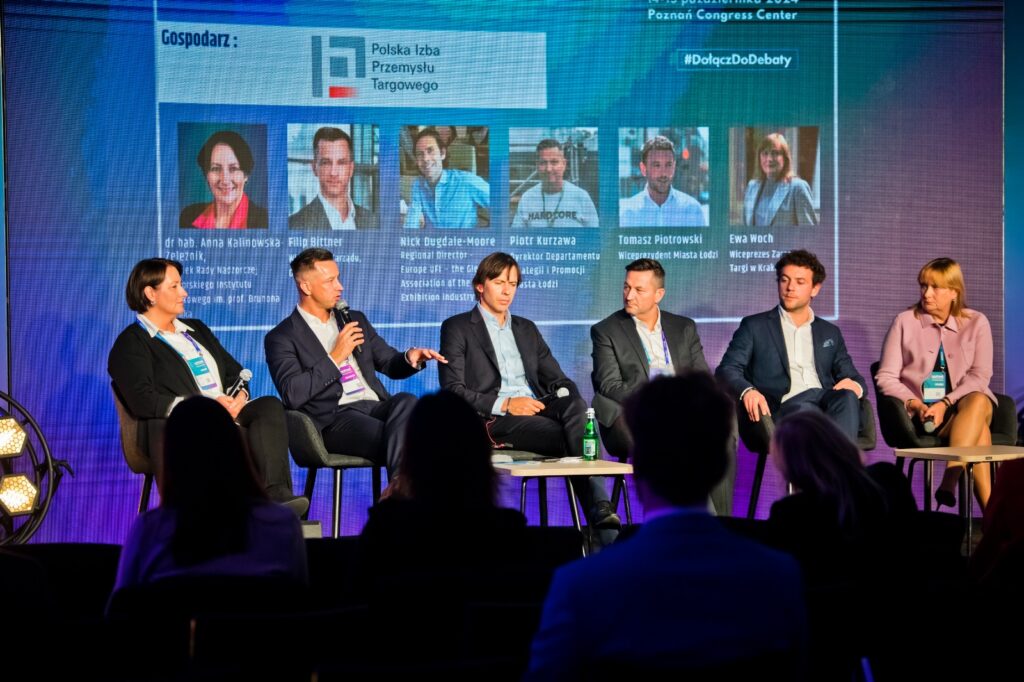
On 15 October 2024, at the Poznań International Fair grounds, the Local Trends Congress featured a panel entitled “The role of trade fairs, congresses and events in the development of cities and regions”, hosted by the Polish Chamber of Exhibition Industry. The panel brought together Filip Bittner (Vice-President of the Management Board, Grupa MTP), Nick Dugdale-Moore (Regional Director for Europe, UFI – The Global Association of the Exhibition Industry), Ewa Woch (Vice-President, Targi w Krakowie), Dr hab. Anna Kalinowska-Żeleźnik, Professor at UWSB Merito, Tomasz Piotrowski (Deputy Mayor of the City of Łódź) and Piotr Kurzawa (Director of the Strategy and Promotion Department of the City of Łódź). The panellists discussed various aspects of the impact of events on the development of cities and regions.
The panel opened with the topic of cooperation between the exhibition industry and local governments and city authorities, which, as Nick Dugdale-Moore of UFI emphasised, differs depending on the region and the country. In some places the sector receives strong government support, which allows it to grow more dynamically, while in other regions support is more limited or non-existent. This situation highlights the need for greater involvement of politicians and local decision-makers in the development of the industry, which would allow both the events and the cities in which they are organised to develop more fully.
One of the main topics raised during the panel was the role of events in the development of tourism, particularly business tourism. Tomasz Piotrowski, Deputy Mayor of the City of Łódź, pointed out that the city is steadily developing its hotel and tourism infrastructure in order to attract both tourists and event participants. The city is focusing on events, concerts and festivals as a way of building its image and generating additional revenue for the city budget, but it is also concentrating on creating high-quality living conditions for its residents. This approach makes Łódź attractive not only to visitors but also to people planning to settle there permanently.
In the context of sustainability, the panellists stressed the need to expand trade fair and event infrastructure and to organise events in a responsible and environmentally friendly manner. They discussed the fact that events should minimise their carbon footprint, among other things by using local suppliers, promoting green solutions and reducing CO2 emissions, particularly with regard to participants’ travel.
Although sustainability has now become a popular topic, many centres and venues had been implementing environmentally friendly measures for a long time, before it became a trend, added Ewa Woch, Vice-President of Targi w Krakowie. Anna Kalinowska-Żeleźnik added that care for the environment should go hand in hand with concern for people’s well-being, because, despite the challenges, people have a natural need to meet and build relationships.
The city-forming role of events was another point of discussion. Filip Bittner noted that large events not only attract visitors to a given city but also influence the development of new industries, trends and investments. One example is Cavaliada Tour – the largest series of equestrian competitions in Poland, which was originally held in Poznań and now has editions in four cities. The event has contributed to the development and promotion of the equestrian industry and today it not only provides entertainment for participants but also has an impact on local communities, shaping their mindset and setting trends.

We encourage you to take part in future editions of the Local Trends Congress, so that together we can build the future of the meetings industry through cooperation and the exchange of experience.